Never trust Christian communities that use “For where two or three are gathered together in my name, there am I in the midst of them” as though the mere presence of a group automatically proves that God approves of their attitudes, decisions, or treatment of others. People can gather in the name of Jesus while still being driven by underlying spirits, beliefs, and practices that are contrary to the inward transformation of the human heart, soul, and mind.
For example, when Christian nationalists gather together, they may invoke the name of God while being driven by the pursuit of political power rather than by the transforming spirit of Christ. This means that their collective religious confidence does not automatically make their cause righteous, especially when their unity is being used to justify loyalty to worldly power, harm against those outside their group, and the dehumanization of people whose dignity, rights, freedom, and well-being they are willing to sacrifice in the pursuit of religious and political dominance.
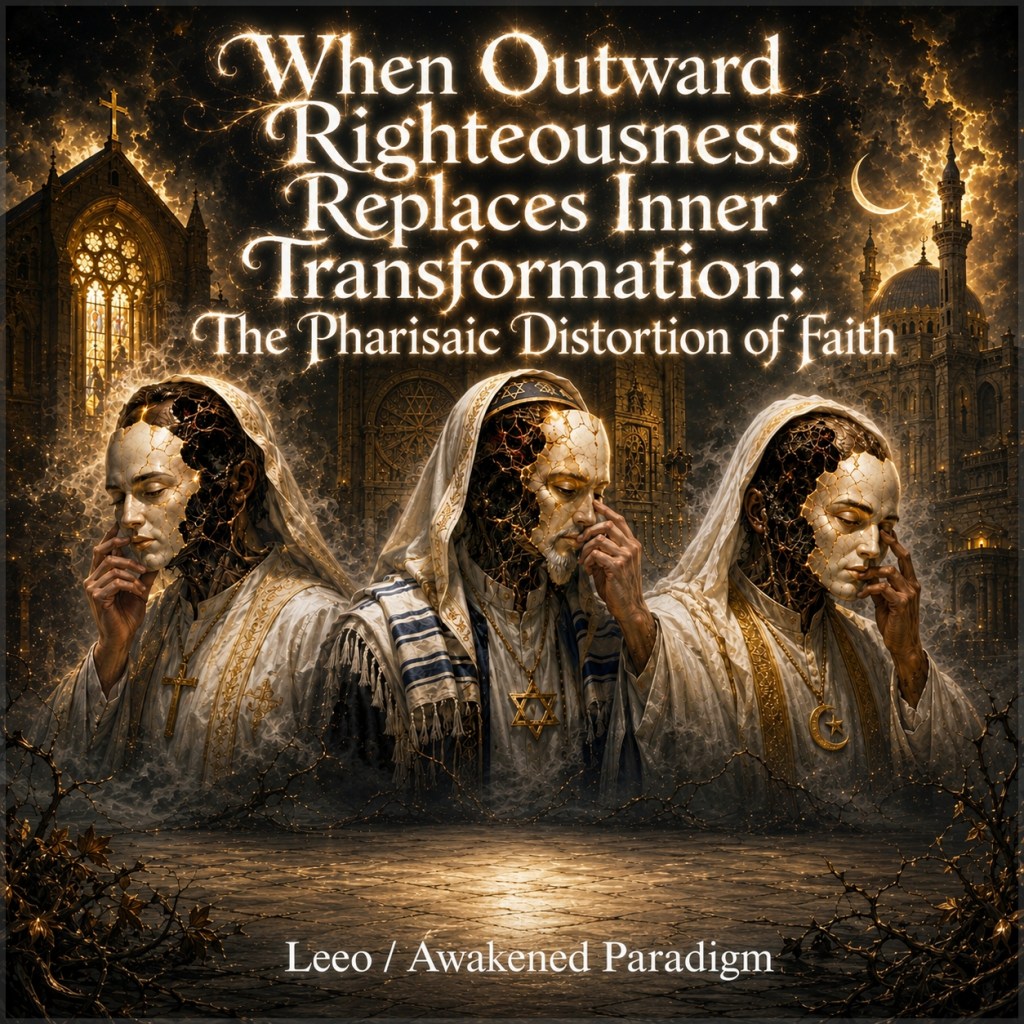
Another example, which ties directly into the point above, can be seen in Christian communities that are Pharisaic in nature. When they gather together, they tend to focus on outward displays of religiosity and care more about being perceived as righteous than about becoming inwardly transformed themselves. This is reflected in the way that they place heavy religious burdens upon others while excusing their own failure to live by the same rigid standards of legalism they impose on everyone else, where they hold other people’s lives and behavior to intense scrutiny while protecting themselves from that same level of examination and accountability. For this reason, neither the religious certainty they reinforce among themselves nor the collective display of supposed righteousness they present to others can be taken as reliable evidence of Christ’s transforming presence simply because they have gathered together in his name.
Therefore, the fact that Christian nationalists and Pharisaic Christian communities reinforce one another’s beliefs and invoke the name of Jesus whenever they gather together does not prove that Christ is present within the spirit of what they are doing. People can speak in the name of Jesus as often and as emphatically as they want, but if they remain outwardly religious, continue placing heavy burdens upon others that they themselves refuse to carry, and resist the very inner transformation that should be taking place within everyone who claims devotion to the Divine, they are simply reproducing the same religious hypocrisy he condemned.
This is why spiritual discernment is so necessary whenever we are dealing with communities, institutions, or social groups that invoke the name of God and present themselves as spiritually legitimate. And that a community’s decision to gather in the name of Jesus, God, or the Holy Spirit does not automatically reveal a sincere and inwardly transformative faith, because its collective attitudes and behavior may reveal a faith that is more invested in maintaining an appearance of righteousness than in undergoing the profound and ongoing work of transformation that God seeks to bring about within the human heart, soul, and mind.
So, for our own spiritual well-being and integrity, we must discern beyond a community’s claim that it has gathered together under the authority and presence of Jesus, God, or the Holy Spirit. And instead, we need to pay attention to the attitudes that its members collectively embody, the way that they actually treat those inside and outside their group, and the fruit that the community produces. Paying attention to these things allows us to discern whether their faith is genuinely producing inward transformation, integrity of conscience, depth of soul, and a more compassionate and Christlike way of treating others, or whether their collective behavior exposes a spirit that is fundamentally contrary to the Christ, God, or the Holy Spirit that they claim to represent.
This is not limited to Christianity, though. Spiritual discernment is necessary in relation to any group, community, institution, movement, or religious tradition that claims to worship God, speak on behalf of the Divine, or present itself as a source of sacred authority. For that reason, no collective claim to spiritual legitimacy made by any group should ever be accepted without examining the underlying spirit animating it, the character it cultivates within its members, the way it treats those who do not belong to it, and whether it produces genuine inward transformation of the heart, soul, and mind, or merely serves to perpetuate hypocrisy, spiritual stagnation, hard-heartedness, corruption of conscience, and harm against others beneath the guise and outward appearance of righteousness.
That is why having an unmediated relationship with the Divine, cultivating an informed conscience, and developing our own capacity for inner transformation, depth of soul, and spiritual discernment apart from external systems of religious authority are all so essential. This is because without these inner foundations of an inwardly grounded faith, we can easily mistake a community’s collective religious certainty, group consensus, or outward displays of religiosity for evidence of God’s presence and approval. This can lead us to surrender our freedom of conscience, intellectual independence, and clarity of righteous spiritual judgement to communities whose outward claims of righteousness actually conceal an underlying spirit that is neither transformative nor of God, if we are not careful.
If we ever find ourselves in the midst of communities like these, we must never allow the fear of rejection, isolation, condemnation, or losing our sense of belonging—however deeply we may feel that fear—to lead us to disregard what we can clearly discern about the spirit that is at work among them. This means that our devotion to God must take precedence over allegiance to any religious community, institution, movement, or tradition, because no group should ever expect us to compromise our integrity of conscience, suppress our spiritual discernment, or participate in harm merely to preserve a sense of collective unity and an outward appearance of righteousness.
We should always remember that if a religious community instills fear within us through the threat of rejection, isolation, condemnation, or the loss of belonging—especially while its members are behaving in ways that are hypocritical, coercive, and harmful—it is not cultivating genuine spiritual unity. Instead, it is exploiting our need for acceptance to pressure us into submitting to corrupted systems of authority and power. So, rather than leading us toward any kind of spiritual healing, liberation from bondage, or inward transformation, these types of religious environments draw us deeper into dependence upon dysfunctional community systems and submission to the distorted forms of control that grow out of them. And that is not the work of God; it is the misuse of sacred authority to keep people spiritually subordinate beneath ungodly systems of spiritual oppression and religious domination.

Not Every Community That Claims God Is of God: When Religious Unity Conceals an Ungodly Spirit
5–7 minutes