I choose to believe that we can escape the prison of samsara, where divine sparks of light are bound to a never-ending cycle of reincarnation, whereby awakening to the divine spark within us and reclaiming what we truly are, we can merge back with a higher pleromic reality of fullness that lies beyond the demiurge and the counterfeit reflection of the higher pleromic reality it has distorted. Yet, even this Gnostic idea of gnosis—meaning direct experiential knowledge of the divine within—it is still a construct of belief, experience, feeling, and interpretation, and just one understanding of reality that is formed within the demiurgic framework of imprisonment that surrounds us.
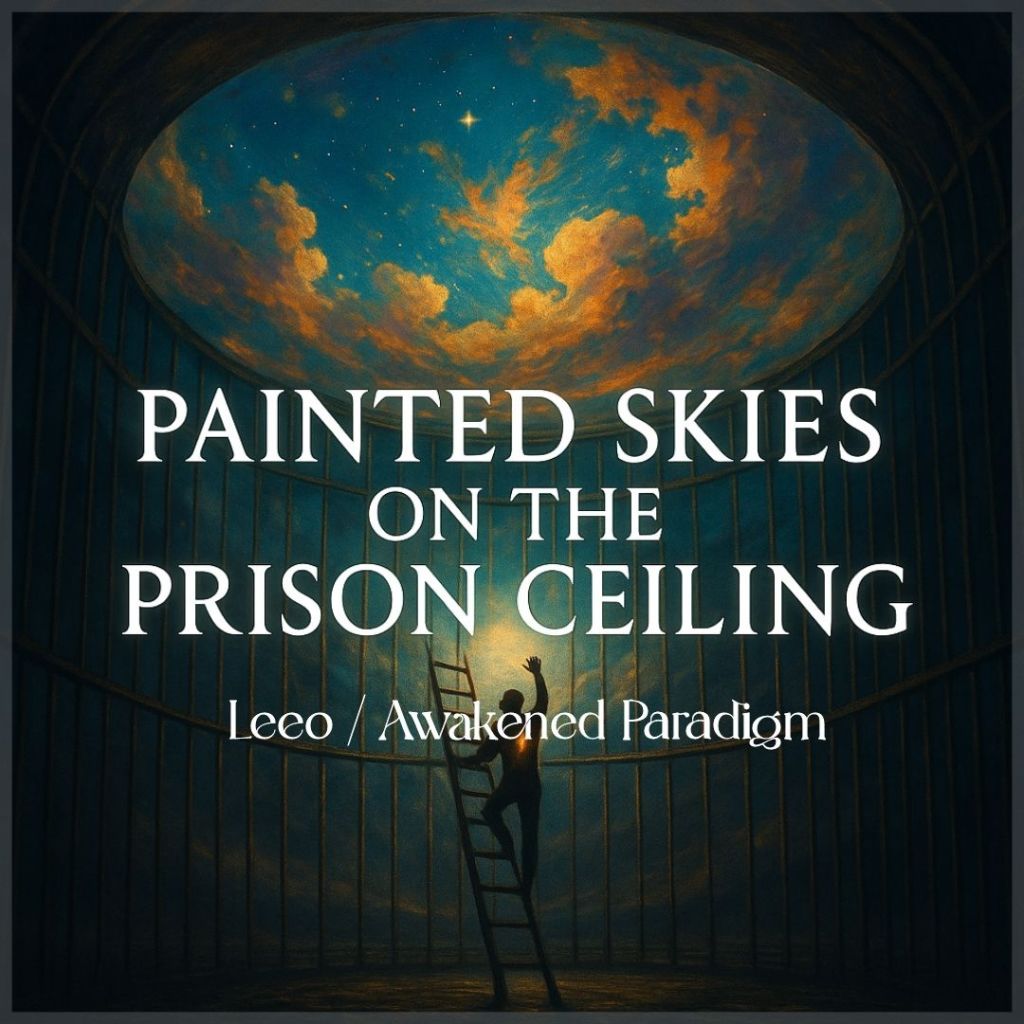
So, it’s like using a ladder that itself is part of the prison walls, where it may give us the impression of movement, or trick us into thinking we’ve found some higher ground of clarity, freedom, experience, or understanding, but in actuality, we’ve only shifted to another tier or plane of illusion in the same cage. And that realization, it brings both humility and freedom: humility, because it shows how fragile even our highest concepts of meaning, knowledge, and liberation can be, and freedom, because it reminds us not to cling to the forms of belief themselves, or even to the living current of awakening that pulses beneath them. Because—the feeling of awakening, the transfiguration we can go through, and that deep internal sense of gnosis that seems so certain, it all very well might just be layers of the demiurgic architecture of imprisonment, where even holding onto any sort of certainty about liberation, truth, or higher knowledge, and the experiences of inner knowing or transformations that we can go through, it all may be nothing more than another veil of illusion.
In a way, it’s like mistaking the painted sky (the many different belief-systems, experiences, interpretations, and frameworks of reality) on the prison ceiling of the demiurgic order itself—throughout all of its universes, realms, and dimensions—for the heavens themselves—where they may appear comforting, even inspiring, and even create deep internal shifts within us, but at the end of the day, those things still remain part of the very architecture of the cage.
And perhaps that is the most difficult paradox of all to accept—that even what feels like escape, transformation, liberation, or transcendence, it may still be part of the trap of the demiurgic order, just another movement within the samsaric dream, and just another shape painted on the ceiling of the cage. Yet within that paradox, there is also a strange kind of freedom, which lies not in grasping for final answers or absolute truth, but in loosening our grip on every construct of belief, experience, and interpretation, and then walking the path of seeking, within the illusion of existence, with our eyes open to the possibility that every layer of certainty, meaning, and revelation, may very well dissolve into yet another illusion of freedom, wholeness, or release.
And that even with everything I’ve explained above, it is all just another construct of words and thought, a demiurgic creation of my own mind, where the very act of describing reality is a product of a mind that is operating within the demiurge’s framework, where thought itself is already shaped and limited by the demiurgic order. And the words I bring forth, they may bring a sense of clarity, recognition, or resonance to someone who may also be questioning things, seeking answers, and journeying along the dream of their own samsaric path, but ultimately still, it all remains just yet another brushed image on the ceiling of the cage of painted heavens.
And that in itself is perhaps the greatest reminder—that even our most profound experiences of awakening and transformation, along with our attempts to name, describe, or escape the demiurgic architecture of illusion, they can never be more than reflections and echoes within it. And in the end, it is all just illusion upon illusion upon illusion.


 Awakened Paradigm